


Tighten a Loose Diamond in Its Setting in Seabrook

A diamond that moves in its setting needs professional attention, not a home adjustment. To tighten a loose diamond in a setting in Seabrook, a jeweler inspects the stone and mounting, secures the stone as needed, then checks that it sits straight and no longer shifts. The prongs should rest snugly against the diamond, without visible gaps.
It’s understandable to worry about a treasured stone, especially when you notice a change in its position. This guide explains signs of a loose or shifted diamond, what a jeweler checks during an assessment, and how to protect the ring while you arrange service. The right repair depends on the setting’s construction and the condition of its prongs, so an inspection helps determine what the ring needs.
Table of Contents
How a jeweler checks whether a stone is secure
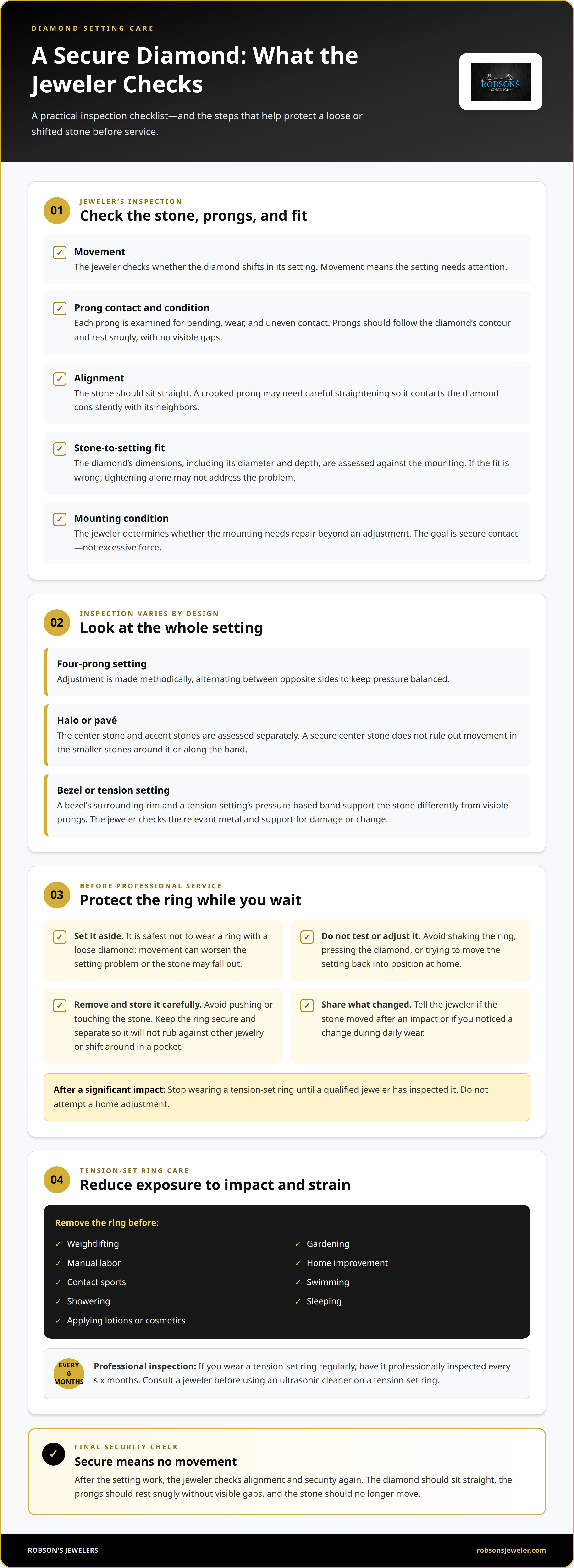
A jeweler checks whether the diamond moves, whether its prongs sit snugly, and whether the stone remains aligned. Movement or a visible gap beneath a prong means the setting needs attention before the ring is considered secure. To tighten a loose diamond in a setting in Seabrook, the jeweler first identifies what is causing the movement.
The inspection starts with the mounting, not simply with pressing the prongs inward. The jeweler examines each prong for bending, wear, and uneven contact with the diamond. Prong seats should follow the stone’s contour closely and leave no gaps. A crooked prong may need careful straightening so it sits evenly with its neighbors and contacts the stone correctly.
Fit matters, too. The jeweler assesses the diamond’s dimensions and depth to determine whether the mounting can hold it securely and position it correctly. If the stone does not fit the setting, tightening alone may not solve the underlying problem. This check is especially relevant if the diamond has shifted or the mounting has been altered.
With a four-prong setting, the jeweler works methodically, alternating between opposite sides to keep pressure balanced. The goal is secure contact, not excessive force. Prongs must be strong enough to retain the stone while remaining proportionate and unobtrusive. The diamond’s shape and the mounting’s condition guide the adjustment. A jeweler tightening a loose diamond in a setting in Seabrook also considers whether the mounting needs repair beyond adjustment.
Prong contact: Each prong should rest snugly against the diamond, without visible gaps.
Alignment: The stone should sit straight, with crooked prongs corrected to follow a consistent direction.
Fit: The diamond’s diameter and depth should suit its mounting.
After the setting work, the jeweler checks the stone’s security and alignment again. A diamond is secure when it no longer moves in its setting. This final assessment matters because a prong may look close to the stone but still fail to hold it properly if its seat does not match the diamond’s contour.
How jewelers check diamonds and gemstones for looseness
For a ring with multiple stones, the jeweler assesses the center stone and accent stones separately. In a halo, that means checking the smaller stones around the center; in pavé, it means examining the closely set diamonds along the band. A secure center stone does not rule out movement elsewhere. The setting style guides the inspection: a bezel’s surrounding rim and a tension setting’s band support the stone differently from visible prongs.
The cost to tighten a loose diamond depends on the work involved, including the setting’s design, the stone’s fit, and whether worn or damaged metal needs repair. A straightforward adjustment differs from work that requires rebuilding part of the mounting. An inspection establishes the appropriate repair and its scope.
In Seabrook, arrange an assessment with a jeweler who handles gemstone setting repairs. You can begin through jewelry repair, where the mounting and stone can be evaluated together. Bring the ring as it is; don’t try to press a loose stone or setting back into position before the assessment.
There’s no single completion time for every repair. Timing depends on the setting’s construction, the diamond’s fit, and whether the mounting needs more than an adjustment. After assessing the ring, the jeweler can explain the expected timing. A while-you-wait repair depends on the work required and the repair schedule, so don’t assume it will be possible.
Homeowners or jewelry insurance coverage depends on the policy wording and the circumstances of the damage. A loose setting and a lost stone may be treated differently under an individual policy. Review the policy terms for jewelry and repair claims, including any conditions that apply to the ring.
These checks can distinguish a loose stone from a broader setting problem. If a bezel rim is bent, pressing it toward the gem may not restore the original fit. If a tension band has taken an impact, its pressure-based hold needs professional assessment. With halo or pavé designs, the jeweler considers neighboring stones and surrounding metal before choosing a repair. This broader view addresses the entire setting, not just the most noticeable diamond.
Everyday precautions
A loose diamond can shift further during ordinary wear, so set the ring aside until a jeweler inspects it. Tension-set rings need particular care because their metal bands hold the stones through pressure.
Wearing a Ring with a Loose Diamond
It’s safest not to wear a ring with a loose diamond. Movement can worsen the setting problem, and the stone may fall out. Stop wearing the ring and arrange a professional inspection rather than testing the stone by shaking or pressing it.
After a significant impact, stop wearing a tension-set ring until a qualified jeweler has inspected it. Don’t try to adjust this setting at home. If you wear a tension-set ring regularly, have it professionally inspected every six months. These checks can identify a change in the band’s hold before continued wear puts the stone at greater risk.
Preparing for a Jeweler Visit
Before taking the ring in, remove it carefully and avoid touching or pushing the diamond. Store it securely so it won’t rub against other jewelry or shift around in a pocket. Tell the jeweler if the stone moved after an impact or if you noticed a change during daily wear.
For a tension setting, mention any recent impact and stop wearing the ring until it has been inspected. Don’t use an ultrasonic cleaner before consulting a jeweler, since tension-set rings need assessment before this cleaning method. These steps help preserve the ring’s condition while the jeweler evaluates the setting.
Everyday activities can expose a ring to knocks, pressure, or substances that affect its care. Remove a tension-set ring before weightlifting, gardening, manual labor, home improvement, contact sports, swimming, showering, or sleeping. Take it off before applying lotions or cosmetics, too. For regular wear, plan a professional inspection every six months. After an impact, leave the ring off until it has been inspected rather than relying on a quick visual check.
Signs of a loose or shifted diamond
A changing fit or uneven appearance can signal a problem with a diamond’s setting. Look for visible changes without pressing or shaking the stone.
Recognizing a Loose Diamond
A diamond may be loose if it moves within the setting or no longer appears firmly held. Look closely at the prongs: a visible gap between a prong and the stone, or a prong that looks bent, can indicate weakened contact. Compare the prongs around the stone; uneven placement may help explain why the diamond feels less secure.
Don’t test the setting by pushing the diamond. A professional inspection can determine whether the stone moves and whether the prongs still follow its contour. If you see a gap or movement, stop wearing the ring and arrange an assessment. Even a stone that seems nearly secure needs proper inspection before regular wear.
Noticing a Shifted Diamond
A shifted diamond may sit crooked or look off-center compared with the ring’s design. From above, check whether its outline aligns with the band and whether surrounding accents appear evenly placed. In a halo setting, a center stone that looks tilted against the smaller stones is a visible change worth noting.
Prongs can also reveal a shift. Look for one that no longer points toward the top of the stone or for uneven spacing around the diamond. These visual clues don’t establish the cause, but they help describe what has changed. Don’t try to realign the stone yourself.
Before the assessment, note when you first noticed the change and whether it followed an impact. Mention details such as a newly visible gap, a crooked appearance, or movement during ordinary handling. This gives the jeweler specific observations to consider alongside the mounting’s condition and the stone’s fit.
A diamond that appears misaligned may need more than a simple adjustment if its mounting has also changed shape. The jeweler evaluates the stone and its setting together, then checks alignment after any work. If you’ve noticed movement or a visible shift, arrange professional jewelry repair before wearing the ring again.
Robson's Jewelers
Robson's Jewelers provides Jewelry Repair for rings with a loose or shifted diamond. If you’ve noticed movement, a change in position, or a gap near a prong, stop wearing the ring and arrange professional attention.
A jeweler can assess the stone and setting together, then determine what repair the mounting needs. The right approach depends on the setting’s construction, the diamond’s fit, and the metal’s condition. This careful assessment addresses the cause of the movement rather than simply pressing the stone back into place. If a repair would change the ring’s design, Custom Jewelry Design may also be relevant.
If your ring no longer feels secure, contact Robson's Jewelers about Jewelry Repair.
Choose a thoughtful next step for your ring
A ring can carry a personal history, so deciding what happens next deserves care. If you need a jeweler to tighten a loose diamond in its setting in Seabrook, Robson's Jewelers can assess it through its Jewelry Repair service. The store also offers Engagement Rings and Custom Jewelry Design, which may be useful if you’re considering changes beyond securing the stone.
Describe what you’ve noticed and let the setting’s condition guide the conversation. A clear assessment can help you understand whether the existing design can be repaired as it is or whether another approach makes sense. You don’t need to decide on a redesign before learning what the mounting needs.
Take the next step at a pace that feels right for you. Contact Robson's Jewelers about your setting to discuss your ring and its repair. With the right attention, you can make an informed decision about caring for a piece that matters to you.
Frequently Asked Questions
How much does it cost to tighten a loose diamond in a ring?
The cost depends on the setting’s design, the diamond’s fit, and whether worn or damaged metal needs repair. A jeweler can establish the scope of the work after inspecting the ring.
How long does a jeweler take to tighten a loose diamond?
Timing depends on the setting’s construction, the diamond’s fit, and whether the mounting needs more than an adjustment. The jeweler can explain the expected timing after assessing the ring.

Comments