


Loose Lab Grown Diamonds: A Buyer’s Guide for 2026

Updated: Nov 8
What if the best loose lab grown diamond for your ring isn’t the one with the highest carat weight? The right choice depends on how the stone looks, what its grading details tell you, and how it will work with the setting you have in mind.
It’s understandable to want clear answers before choosing a stone. Lab-grown diamonds have the same physical, chemical, and optical properties as mined diamonds, while simulants such as cubic zirconia are different materials. Comparing cut, color, clarity, and carat can help you narrow your options, but no single grade tells the whole story. A grading report is a useful guide to a diamond’s recorded characteristics, not a substitute for considering its appearance and fit in your design.
This guide explains how to assess origin and quality, weigh the 4Cs in practical terms, and choose a loose diamond that suits your priorities and the ring you’re imagining. At Robson’s Jewelers, a family-owned jeweler in Baytown, you can explore loose lab-grown diamonds and consider how one might suit an engagement ring or custom design. Whether you’re visiting from Baytown, Mont Belvieu, Seabrook, La Porte, or Dayton, start with what feels meaningful, then look closely at the details.
Table of Contents
What Are Loose Lab Grown Diamonds, and What Makes Them Different?
A loose lab-grown diamond is a diamond created in a controlled laboratory environment that hasn’t yet been mounted in a ring or another jewelry setting. Shoppers consider loose lab grown diamonds when they want to compare stones individually or let a particular diamond help shape an engagement ring or custom design. “Loose” describes how the stone is presented, not its quality or origin.
Lab-grown diamonds have the same essential physical, chemical, and optical properties as mined diamonds. Their difference is origin: one forms in the earth, while the other is grown in a laboratory. Both can be assessed for cut, color, clarity, and carat weight. The Synthetic Diamond on Wikipedia overview describes lab-growing methods including high-pressure, high-temperature (HPHT) and chemical vapor deposition (CVD).
How is a lab-grown diamond different from a diamond simulant?
A diamond simulant is a different material chosen to imitate a diamond’s appearance. Cubic zirconia is one example. A lab-grown diamond, by contrast, is diamond. “Lab-grown” describes how it originated, not a different material category. That distinction matters when comparing stones, even if two gems look similar at a glance. Appearance alone can’t reliably establish what a stone is or where it came from, so review its identification and grading documentation as part of your assessment.
Why consider a loose diamond before choosing a ring?
Choosing the center stone separately gives you room to consider what you value in the diamond before settling on a setting. Its shape, measurements, and proportions can guide the design conversation. Whether working with a local jeweler or consulting diamond specialists like Ribacoff Diamonds for certified loose stones and custom rings, starting with the diamond gives you flexibility. For example, you might consider whether a simple setting keeps attention on the stone or whether you want additional details in the overall design. These are options to explore, not guaranteed visual outcomes.
Think of the stone and setting as parts of one finished piece. The setting needs to suit the diamond’s shape and dimensions, and the design should feel cohesive and comfortable for the wearer. Considering them together helps you plan for the complete ring instead of choosing a stone by one number and leaving the setting as an afterthought.
For Baytown-area shoppers, the engagement ring guide for Baytown offers a related starting point for thinking through the ring as a whole. As you compare stones, keep three details in view: origin, documented characteristics, and intended design. That gives you a sound foundation for weighing each diamond’s qualities against your priorities.
How to Evaluate Loose Lab Grown Diamonds Beyond Carat Weight
Comparing diamonds is easier when you look beyond a single headline number. The 4Cs give you a shared framework for understanding a stone, but their importance depends on what you notice and the design you have in mind. One buyer may value a lively-looking cut; another may prioritize a particular shape or face-up size.
What does each of the 4Cs tell you?
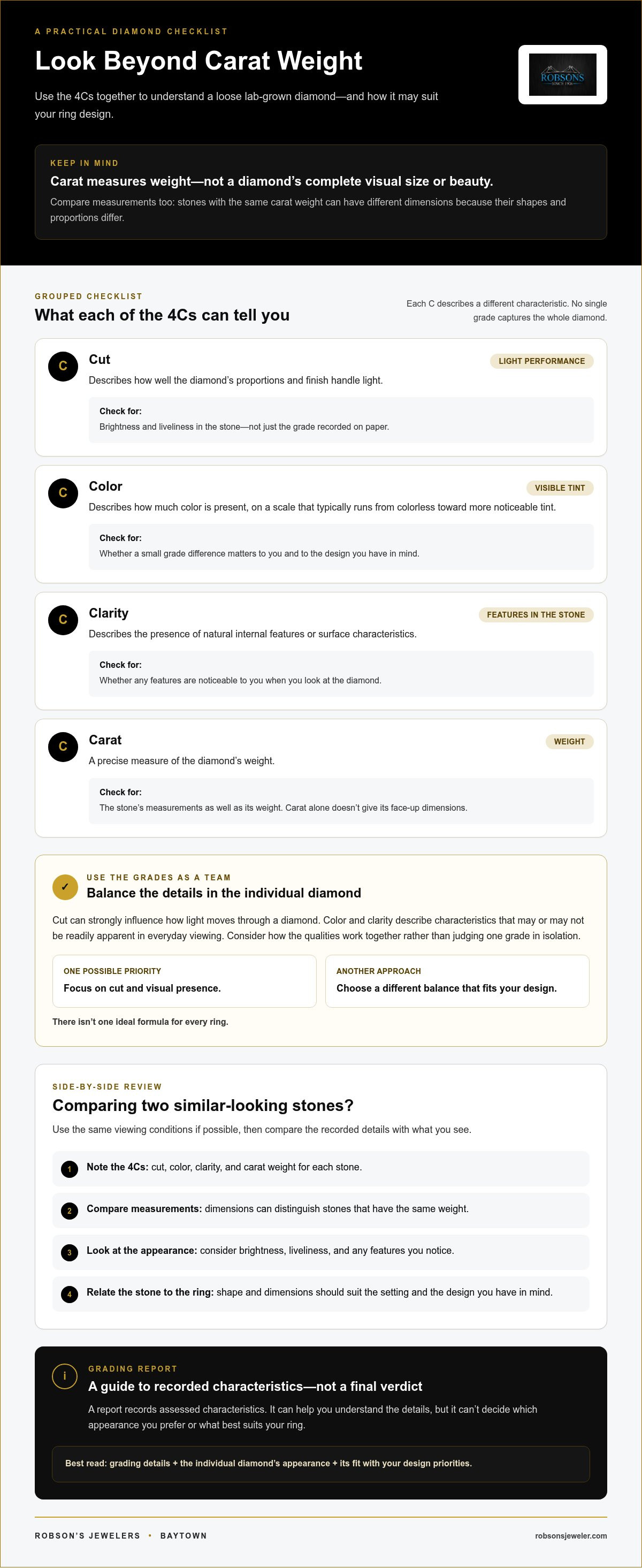
Use this guide to understand the basic terms. Each describes a different characteristic, and none alone captures the full experience of a diamond.
Cut can strongly influence how light moves through a diamond, while color and clarity grades describe characteristics that may or may not be readily apparent in everyday viewing. Carat is a precise measure of weight, not a complete measure of visual size or beauty. Two stones with the same carat weight can have different measurements because their shapes and proportions differ.
The 4Cs work best as a team: compare how they balance in the individual diamond, not how one grade looks in isolation. That leaves room for personal priorities. You might focus on cut and visual presence, or prefer another combination that fits your design. There isn’t one ideal formula for every ring.
How can you compare two similar-looking stones?
Start with the grading details, then compare the diamonds’ appearance under similar viewing conditions if possible. Note each stone’s cut, color, clarity, carat weight, and measurements. If two options appear similar at first glance, checking their dimensions and how they handle light can help you understand what distinguishes them beyond weight.
A grading report records assessed characteristics. It can’t decide which appearance you prefer or what best suits your ring. The GIA’s research on lab-grown diamonds offers further gemological context. For a considered side-by-side selection, explore loose lab-grown diamonds with Robson’s Jewelers and weigh the details against the design you’re imagining.
Are Loose Lab Grown Diamonds a Genuine, Quality Choice?
It’s natural to wonder whether a lab-grown diamond is an imitation. The distinction is origin, not whether the stone is diamond: lab-grown diamonds are diamonds, while simulants are different materials. The next question is practical and personal: does this individual stone have the characteristics you want for the piece you’re planning?
A diamond’s origin tells you where it formed; its grading details describe assessed quality characteristics. These are separate considerations. A lab-grown origin doesn’t guarantee a particular cut, color, clarity, or appearance, just as knowing a stone’s weight can’t tell you how it will look in a setting.
Does lab-grown origin determine a diamond’s quality?
No. Origin describes how a diamond formed, not the quality grades of an individual stone. Two lab-grown diamonds can differ in cut, color, clarity, measurements, and overall appearance. Compare the specific stone’s documented characteristics rather than assuming that stones with the same origin will look or perform alike.
A balanced approach helps. A report makes characteristics easier to compare, but the grades matter in relation to your priorities. If you’re drawn to a particular shape or design, consider how the stone’s proportions and recorded details support that choice. A higher grade in one area won’t automatically make a diamond the right match for every ring.
What should you expect from a diamond grading report?
A grading report records a stone’s assessed characteristics. It isn’t a promise that you’ll prefer the stone’s appearance. Reporting systems can differ. As of October 2026, GIA assesses lab-grown diamonds in Premium and Standard categories, while IGI continues to provide lab-grown reports using the traditional 4Cs. Read the stated grading approach before comparing labels across reports.
Before relying on a report, match it to the exact diamond you’re considering. Check that the identifying details correspond to the stone, then note which characteristics the report assesses and how they’re expressed. Keep the report alongside your own observations. It can help describe and compare a diamond, but it can’t decide what looks beautiful to you or whether the stone suits your design.
Use documentation to compare: Look at the assessed characteristics, not just a broad label or headline grade.
Consider the whole stone: Pair report details with the diamond’s appearance and intended setting.
Keep preference in view: A report provides information; your design goals determine which details matter most.
When choosing loose lab grown diamonds, treat origin, documented characteristics, and personal taste as related but distinct parts of the decision. This lets you understand what the stone is while assessing whether its particular qualities suit the ring you have in mind.
How to Choose a Loose Lab Grown Diamond for Your Design
Choose with the finished piece in mind. A loose stone may catch your eye on its own, but the ring’s shape, setting, and proportions help determine how the complete design comes together. Use this sequence to keep your priorities clear as you compare loose lab grown diamonds.
Define the design. Decide whether you’re imagining a classic engagement ring, a custom piece, or a setting you’ve already chosen. Gather a few reference images or note details you like, such as a simple band or a more decorative setting.
Choose a shape. Consider which outline and overall character appeal to you before narrowing down individual stones.
Compare the 4Cs. Look at cut, color, clarity, and carat together, giving greater weight to the characteristics that matter most for your design.
Review documentation. Match the report to the specific diamond and use it to understand the stone’s assessed characteristics.
Assess setting fit. Consider the diamond’s measurements and proportions alongside the setting, so the design is planned around the actual stone.
Which diamond shape suits the design you have in mind?
Round, oval, pear, emerald, and cushion shapes offer different visual outlines. None is a universal measure of quality. Shape can influence a ring’s character and how the center stone relates to the band or surrounding details. Think about your personal style and how you’d like the finished ring to feel as an everyday piece, then compare options in the context of the design.
Proportions matter, too. Two diamonds of the same shape may have different length-to-width relationships, affecting the outline you see. Use measurements and direct viewing, where possible, to decide which proportions feel right to you. For broader guidance on evaluating stones, the Baytown loose-diamond buying guide can help you think through the selection process.
How should the diamond and setting work together?
A setting is made to hold a particular stone, so measurements and proportions inform how the diamond can be incorporated into the design. A setting you already own may guide your stone search. If you’re creating a ring from the beginning, the diamond can help shape decisions about the setting. In either case, consider the complete ring rather than judging the loose stone alone.
For a custom piece, bring your ideas and the diamond’s details into the same conversation. Robson’s Jewelers provides custom jewelry design in Baytown, where a chosen stone can inform the design process. Explore your options with Robson’s Jewelers and consider how the diamond, setting, and personal style can come together in one meaningful ring.
Explore Loose Lab Grown Diamonds with Robson’s Jewelers in Baytown
A diamond can be more than a set of grades on a page. It may become the center of an engagement ring, mark an important promise, or give a custom design its starting point. At Robson’s Jewelers in Baytown, shoppers can explore loose lab-grown diamonds and consider how a stone could suit the piece they have in mind. The showroom welcomes shoppers from Baytown, Mont Belvieu, Seabrook, La Porte, and Dayton.
Bring your questions, preferences, and early design ideas. You don’t need to arrive with every detail settled. A thoughtful conversation can help connect the diamond’s characteristics with the ring’s purpose, so your choice feels informed as well as personal.
What can a personal diamond-selection conversation help clarify?
Talk through the shape you’re drawn to, which of the 4Cs matter most to you, and the setting you’re considering. Maybe you have a clear preference, or perhaps you’re weighing a few possibilities. Sharing what you like about a design adds useful context, while clear explanations make grading terms easier to relate to your priorities.
Take the time you need to understand your options. There’s no need to make a quick decision just because a diamond has a particular grade or measurement. An in-person discussion can help you consider the details, compare what matters to you, and think about how the stone may work within your intended design.
How can a loose diamond become a meaningful finished piece?
The chosen diamond can guide an engagement-ring or custom-design project, but the finished piece should reflect more than technical details. Think about the wearer’s style, what the ring is meant to celebrate, and which design choices feel lasting and true to that meaning. Those personal considerations connect the stone to the story behind the jewelry.
At Robson’s Jewelers, a loose diamond can begin a conversation about an engagement ring or a custom piece. The Baytown showroom offers a local place to discuss your priorities and how they might shape the finished design. Explore loose lab-grown diamonds at Robson’s Jewelers and discuss the ring you’re imagining in person. A meaningful choice starts with what matters to you.
Make Your Next Step a Personal One
A meaningful ring doesn’t have to begin with a perfect plan. Start with a feeling: the kind of piece you want to wear, the detail that would make it yours, or the story you hope it will carry. Let that first idea guide your next conversation, even if it’s still taking shape.
As you consider loose lab grown diamonds, focus on what resonates, not just what seems impressive on paper. The right direction connects your preferences with the purpose of the piece. Questions and changing ideas are part of thoughtful design, not signs that you’re behind.
Robson’s Jewelers brings a family-owned perspective to choosing a diamond and imagining what it could become. If you’re in Baytown, Mont Belvieu, Seabrook, La Porte, or Dayton, explore the possibilities at the Baytown showroom, then take the next step: Explore loose lab-grown diamonds at Robson’s Jewelers. Your idea deserves room to become something distinctly yours.
Frequently Asked Questions
Can a jeweler identify a lab-grown diamond after it has been set?
Yes, a jeweler may be able to identify a lab-grown diamond after setting, but visual appearance alone isn’t a dependable way to establish origin. Identification may involve professional testing, and the equipment or process can vary between jewelers. If you have documentation for your loose lab grown diamonds, keep it with your purchase records. If the stone’s origin needs to be established later, a jeweler can explain suitable examination options.
Do loose lab-grown diamonds lose their sparkle over time?
A diamond can appear less bright when dirt, oils, or residue build up on its surface and affect how light passes through it. That change in appearance doesn’t mean the diamond’s origin has changed. Follow appropriate jewelry-care guidance, and seek professional advice if you’re unsure how to clean your piece or would like it inspected. For a ring worn often, gentle routine care can help maintain its appearance.
Can you insure a lab-grown diamond?
Lab-grown diamonds may be eligible for insurance, but requirements and coverage depend on the insurer and policy. Keep the purchase record together with any grading report or appraisal you have, since an insurer may ask for documentation. An appraisal can describe a piece, but it doesn’t determine whether an insurer will cover it or on what terms. Review the policy carefully, including how the diamond and setting are addressed.
Are lab-grown diamonds suitable for everyday engagement rings?
They can be suitable for everyday engagement rings, depending on the individual stone, its setting, and how the ring is worn and cared for. Consider practical details such as how the setting holds the stone and whether its design suits the wearer’s routine. For shoppers in Baytown, Mont Belvieu, Seabrook, La Porte, or Dayton, Robson’s Jewelers can discuss care suited to the finished piece. No diamond is damage-proof.
Are lab-grown diamonds environmentally friendly?
Environmental impact can vary with how a diamond is produced, the energy sources involved, and other parts of its supply chain. The label “lab-grown” alone doesn’t establish that a particular stone is sustainable or has a specific environmental footprint. If this matters to your choice, look for specific, verifiable information about the individual diamond and how it was produced. Be cautious of broad claims that don’t explain what they’re based on.
Can a lab-grown diamond change color over time?
A diamond’s graded color is a characteristic of the stone, but its appearance can seem different under varied lighting or against different surroundings. Surface oils or residue can also affect how it looks. That doesn’t necessarily mean its color has changed. Consider the diamond in the setting and lighting where it’s usually worn. If its appearance changes unexpectedly, have a jeweler examine it and offer guidance.
Comments