


Buy Natural Diamonds in Baytown and Compare Ring Options

To buy natural diamonds in Baytown, compare stones by shape, carat weight, cut, color, and clarity, then narrow your options to fit your budget. Comparing natural and lab-grown diamonds side by side can clarify the differences before you choose a ring.
A ring should feel right in its details as well as in the moment. This guide explains how to use diamond filters, what grading factors tell you, and how to compare ring options around Baytown so you can make an informed choice.
Table of Contents
Natural and lab-grown diamond searches
Start by choosing the diamond origin you want to compare. Natural diamonds form underground; lab-grown diamonds are created using controlled processes. Both are diamonds, but their origins differ. In Baytown, search each category separately before comparing shape, cut, color, clarity, and carat weight. That keeps unlike options from blending together.
Use a practical sequence: choose natural, lab-grown, or both; select a shape; then set the characteristics that matter most. For example, compare an oval natural diamond with an oval lab-grown diamond before changing the shape. This helps you see how origin and grading details affect your shortlist.
Origin: Separate natural and lab-grown results to make direct comparisons clearer.
Shape: Try round, oval, emerald, princess, cushion, or radiant.
Cut: Compare the cut grade shown for each diamond.
Color and clarity: Filter each separately, then review the combined result.
Carat weight: Set a preferred range and compare stones near its boundaries.
Shape describes a diamond’s outline, while cut describes how its facets interact with light. A round shape and an Excellent cut are separate details, not interchangeable labels. Use both when comparing stones. Then review color and clarity alongside carat weight, since changing one filter can alter the available combinations.
When you buy natural diamonds in Baytown, start with the qualities you value most rather than choosing by carat weight alone. A smaller stone in your preferred shape may suit your design better than a larger stone in another shape. Keep a short comparison list of each diamond’s origin, shape, cut, color, clarity, and carat weight.
Texas sales tax and consumer-protection requirements follow applicable state rules. Tax treatment can depend on transaction details, while the written sales record documents the purchase and its terms.
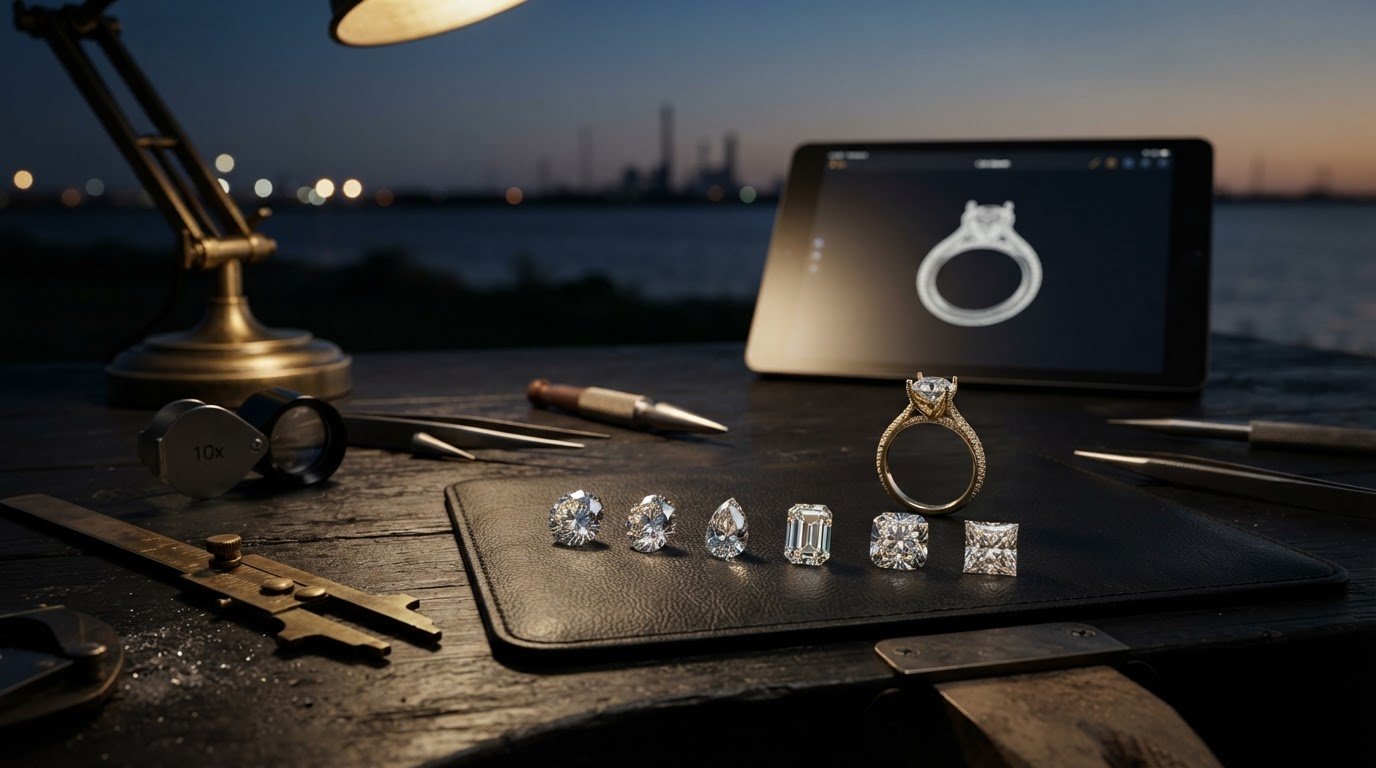
Natural diamond shapes in market examples include round, oval, emerald, princess, cushion, and radiant. Listed examples range from a 1.00-carat emerald to a 3.00-carat round. These examples illustrate search filters, not guaranteed local inventory. Use shape and carat filters to explore the options shown by Baytown jewelry stores.
GIA appears on the natural diamond examples listed here. Compare each stone’s grading report with its listing, including carat weight, shape, cut, color, and clarity. Matching those details helps distinguish one diamond from another.
Return, warranty, and upgrade terms vary by retailer. The written terms explain applicable time limits, exclusions, and upgrade conditions. Review them alongside the diamond details, and keep the receipt and grading report with your purchase records.
Price filters
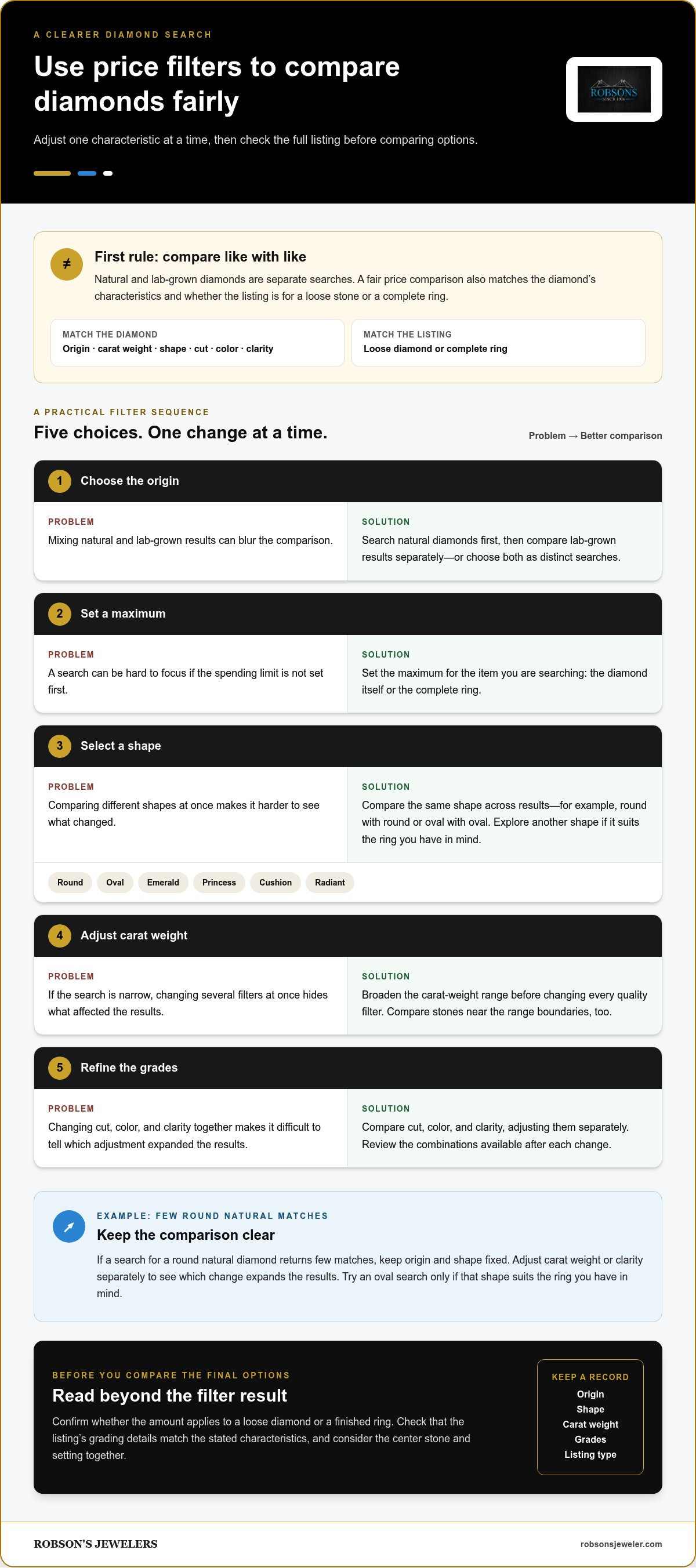
Set a budget filter before comparing individual stones, then adjust one characteristic at a time. This makes it easier to see which trade-offs bring more options into view. Compare like with like: natural and lab-grown round diamonds are different searches, even when their other filters match.
Natural diamond prices in Baytown cannot be ranked as universally higher or lower than prices found elsewhere or online. A fair comparison matches origin, carat weight, shape, cut, color, clarity, grading details, and whether the listing is for a loose stone or a complete ring.
Engagement ring prices in Baytown vary with the center diamond and setting. Carat weight, cut, color, clarity, shape, and setting materials all affect the total, so no single price describes every ring.
Use the filter controls in a deliberate order:
Choose origin. Select natural diamonds first, then compare lab-grown results separately.
Set a maximum. Start with the spending limit for the diamond or complete ring, whichever you’re searching.
Select shape. Compare the same shape across results, such as round with round or oval with oval.
Adjust carat weight. If the search is narrow, broaden the range before changing every quality filter.
Refine the remaining grades. Compare cut, color, and clarity, then review the available combinations.
For example, if a search for a round natural diamond returns few matches, keep the origin and shape fixed first. Then adjust carat weight or clarity separately. You’ll see which change expands the results without losing track of what caused the difference. Try an oval search only if that shape suits the ring you have in mind.
Filters are a starting point, not a complete comparison. Read each listing closely: confirm whether the displayed amount applies to a loose diamond or a finished ring, and check that the grading details match the listed characteristics. Since the setting can change the overall look, consider the center stone and mounting together.
Keep a short comparison record with each option’s origin, shape, carat weight, grades, and listing type. This makes local Baytown and online listings easier to compare fairly. If you’re weighing a loose stone against a finished design, explore natural diamond ring options as part of your comparison.
Specific listings can show why a filter result needs to be assessed alongside its full set of attributes.
These are individual listings, not like-for-like price points: shape, carat weight, grades, and cut vary across the examples. Keep each description beside its price while filtering, and compare listings that match the characteristics relevant to your search.
Ways to shop for an engagement ring
Begin with three decisions: the ring’s look, the diamond, and how you want to shop. A solitaire focuses attention on one center stone. A halo frames it with smaller stones, while a three-stone design adds companions to the center diamond. Knowing which look appeals helps narrow your search.
In person, you can view ring proportions directly. Compare a round diamond in a solitaire setting, then see the same shape with a halo. Notice the band’s width and how high the center stone sits. These details affect the ring’s appearance and how it feels on your hand.
Online browsing can help you explore shapes and settings before visiting a store. Save a few examples, such as an oval solitaire and an emerald-cut halo. Note what you like about each, whether it’s the outline, setting, or band. Those notes can guide a focused conversation instead of a vague description.
There are three useful shopping approaches:
Choose a finished ring. Compare its center stone, setting, and overall design together.
Select a loose diamond and setting. Match a preferred stone to a mounting that suits its shape.
Explore a custom design. Bring reference images and identify details to adapt, such as a band profile or setting style.
With a loose diamond, consider how the setting supports its outline. A princess-cut diamond, for example, has corners that need a compatible mounting. An oval may look different in a narrow band than in a wider one. Compare the stone and setting together, not as separate choices.
Bring a practical shortlist to your shopping visit: preferred shapes, a setting style, metal preference, and the diamond details you’ve prioritized. Include an alternative for each choice. For instance, list oval as your first choice and round as another possibility. This keeps your search flexible without losing sight of your vision.
Use the same criteria for every ring you compare. Check the center stone’s grading details and the setting’s design, and confirm whether the listing describes a complete ring or a loose diamond. If two options differ, note exactly how, such as a different shape, setting, or combination of diamond qualities.
Before deciding, review the ring’s proportions from several angles and consider how it pairs with a wedding band. A low-profile setting may sit differently beside a band than a raised solitaire. These visual comparisons can help turn saved inspiration into a personal, considered design.
Where can I buy natural diamonds in Baytown, Texas?
Start with Baytown jewelry stores that carry natural diamonds. Look for listings that clearly identify a stone as natural. Compare the diamond details, not just photographs or broad labels. A round natural diamond and an oval natural diamond are distinct choices, even at similar carat weights.
Use a focused local search. Decide whether you want a loose stone or a completed ring, narrow your preferred shape and grading priorities, then compare the options in person or through a store’s online information. A clear starting point makes it easier to discuss a specific diamond instead of browsing without direction.
For an in-store visit, bring a short list of preferences, including a shape, carat range, and the qualities that matter most. For example, someone drawn to ovals might compare two stones with different clarity grades. View the grading details alongside each diamond so you can consider the stone and its description together.
Use these steps to organize your search:
Choose the origin. Specify natural diamonds when reviewing search results or discussing options.
Set your priorities. Pick a preferred shape and decide which grading characteristics matter most.
Compare individual stones. Review each diamond’s stated specifications and documentation.
Consider the finished ring. Think about how a chosen stone will pair with a setting and band.
Keep a shortlist. Record the details that distinguish each option for easier comparison.
A Baytown jeweler may present loose diamonds separately from finished rings. A loose stone lets you consider the setting independently. A completed ring shows how the center diamond and mounting work together. Compare both formats if you’re still deciding between a ready-made design and a more tailored look.
Online searches can help you identify shapes and specifications before visiting a store. Save a few examples, such as a round solitaire and an oval ring. Use them to explain your preferences for proportions and design. Treat photographs as a starting point, then review the diamond details and ring construction.
For each option, note the origin, shape, carat weight, cut, color, clarity, and whether the listing describes a loose diamond or a ring. Keep the information in one comparison list. If two listings differ, identify the exact difference instead of relying on appearance alone.
Baytown shoppers can use this process to find natural diamonds locally and compare options carefully. A defined shortlist focuses the search on stones and ring designs that match your priorities.
Which Baytown jewelers sell certified natural diamonds?
Start with Baytown jewelers that identify natural diamonds and provide grading documentation. A grading report describes a diamond’s characteristics; it is not a guarantee of value or a warranty. Review the report alongside the stone, then compare its details with the jeweler’s written description.
GIA appears on the natural diamond listings in this article’s market examples. A GIA report can help you compare a stone’s shape, carat weight, cut, color, and clarity. Review those details together. For example, carat weight alone cannot show how an oval compares with a round diamond.
Check that the report and listing describe the same diamond. Match the shape and grading details, then look for identifying information that links the document to the stone. If a listing calls a diamond natural, make sure its documentation and description use consistent language about origin. Matching records make comparisons more useful.
Use this checklist while comparing Baytown retailers:
Origin: Confirm that the listing identifies the stone as natural.
Grading organization: Note the organization named on the report, such as GIA.
Diamond details: Compare shape, carat weight, cut, color, and clarity.
Document match: Check that the report’s details correspond with the diamond being considered.
Purchase paperwork: Keep the report and sales documents together for your records.
Be precise about the word “certified.” A grading report records assessed characteristics; it does not make every diamond identical or remove the need to compare stones. Documentation can vary, so note the named grading organization and information provided. A certificate label is no substitute for reading the report.
Documentation also differs from an appraisal. A grading report describes a diamond’s characteristics, while an appraisal addresses an item’s value for a stated purpose. If you need a valuation document, ask what the appraisal covers and keep it separate from the grading report. Organized records are useful for future reference.
For a thoughtful comparison, shortlist stones with matching shapes and similar priorities. Review their reports and the retailer’s written descriptions side by side. An Excellent-cut round and a Very Good-cut round, for example, have different stated cut grades. Compare the full details before deciding which suits your ring.
Use the report as one part of your decision, alongside the diamond itself and the ring design. To compare loose natural diamonds, bring your preferred shape and grading priorities into the conversation.
GIA reports are identified on the natural diamond listings and can help you compare a stone’s shape, carat weight, cut, color, and clarity.
Robson's Jewelers: Engagement Rings
Robson's Jewelers offers engagement rings, loose mined diamonds, and custom jewelry design for shoppers creating a meaningful ring. If you’ve narrowed your preferences but still need to bring the stone and setting together, these services are a natural next step. Consider how your chosen diamond’s shape pairs with a setting, then decide whether a finished ring or custom design best reflects your vision.
Comparing natural and lab-grown options? Robson's Jewelers also offers loose lab-grown diamonds, giving you another origin to consider as you refine your choice. Bring your preferred shapes, grading priorities, and design ideas to help focus the selection.
Explore engagement rings or discuss a custom design with Robson's Jewelers in Baytown.
Make Your Ring Feel Like Yours
The next step in choosing a ring is deciding what you want it to represent. A design might reflect a shared memory, a family detail, or a preference for clean, understated lines. Keep one personal detail in mind as you move from browsing to choosing. It can help make the selection feel considered as well as beautiful.
If you’re deciding where to buy natural diamonds in Baytown, Robson's Jewelers offers engagement rings and custom jewelry design. Bring a reference image or a simple description of the feeling you want the ring to capture. The design can begin with that idea. Jewelry repair is also available for a piece that already holds meaning.
Choose the next step that suits you, whether you’re exploring a new ring or considering a personal design. Contact Robson's Jewelers to begin a conversation, and take your time shaping a ring that feels true to your story.
Frequently Asked Questions
How can I verify a diamond is natural and not lab-grown?
Review the diamond’s grading documentation and confirm that it identifies the stone as natural. Ask how the document corresponds to the specific diamond you’re considering, especially if it’s already set in a ring. Check that the sales paperwork describes its origin consistently. Appearance alone isn’t a reliable way to distinguish natural from lab-grown diamonds, so rely on documentation rather than visual judgment.
What questions should I ask before buying a natural diamond in Baytown?
Review what the diamond’s documentation says about its origin and how the record matches the stone. Clarify whether the listing includes a setting or describes a loose diamond. For a finished ring, consider how the setting suits the diamond’s shape and whether the design can be customized. Also review the retailer’s written return, warranty, and upgrade terms to understand the conditions before purchasing.
How much do natural diamond engagement rings cost in Baytown?
Engagement ring prices vary with the center diamond and setting, so there is no fixed price.
What natural diamond shapes, cuts, and sizes are available at Baytown jewelry stores?
Examples include round, oval, emerald, princess, cushion, and radiant shapes, with Very Good, Ideal, and Excellent cuts. Listed sizes range from 1.00 to 3.00 carats; these examples do not guarantee local inventory.

Comments